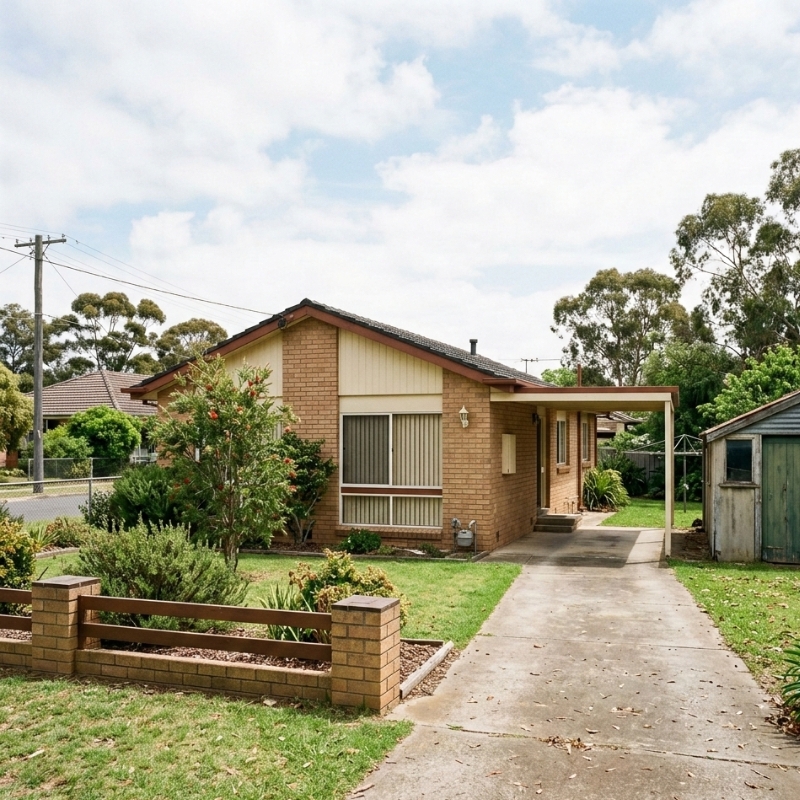
If your home was built or renovated in NSW before the late 1980s (and in some products into the early 1990s), there’s a real chance asbestos-containing materials were used somewhere on the property. In places like Newcastle, the Hunter Valley, the Central Coast and parts of Sydney with older housing stock, that often means asbestos cement sheeting (commonly called fibro), older eaves and soffits, backing boards, vinyl flooring layers, or outbuildings and fences.
The tricky part is this: you generally can’t confirm asbestos just by looking at it. But you can get very good at spotting the common risk clues so you know when to stop, avoid disturbing materials, and choose the right next step.
This guide walks you through:
• the strongest “age + location + material” indicators
• the places asbestos most commonly turns up in older NSW homes
• the difference between lower-risk bonded materials and higher-risk friable materials
• what to do immediately if you’ve already disturbed something suspicious
• when testing makes sense (especially before renovations)
Start with the biggest clue: when your home (or renovation) happened
If you’re trying to assess asbestos risk quickly, the build era is your best starting point.
High-likelihood eras in NSW
Your risk level increases if:
• the home was built or significantly renovated between roughly the mid-1940s and late 1980s
• There were extensions, bathroom/kitchen refits, roof/eave replacements, or shed builds in that period
• you’ve got original external cladding or old outbuildings still on site
Homes built after that can still have asbestos on the property if:
• older sheds, carports, fences, or “patch” renovations remain
• recycled building materials were used
• Older vinyl floors or backing boards were never removed and were simply covered
Q&A: Can I tell asbestos by the year alone?
Not with certainty. The year only tells you the probability. The most reliable approach is to combine:
• the age/reno era
• where the material is located
• what type of product it appears to be
• its condition (intact vs damaged)
If you need certainty, testing is the way to confirm.
Asbestos is commonly found in older NSW homes
Asbestos was used because it was durable, fire-resistant and cheap. That also means it shows up in very practical parts of older homes—especially where moisture, heat, fire risk, or weather exposure mattered.
Outside the home: the usual suspects
In Newcastle, the Hunter and coastal areas (salt air and weathering), you’ll often see older external materials showing their age. Common locations include:
• External wall cladding (fibro/asbestos cement sheeting)
• Eaves/soffits and gable ends
• Backing boards behind electrical meter boxes (older style boards)
• Older garages, carports, sheds and workshops
• Fencing panels and fence cappings
• Roof sheeting on older outbuildings
• Fascia linings, eave linings and older downpipe penetrations
What makes these areas high-risk isn’t simply “being asbestos.” It’s what people do to them: drilling for new lights, replacing eaves, cutting for vents, sanding to prep for paint, or demolishing sheds.
Inside the home: high-risk renovation zones
Indoors, asbestos-containing products often hide behind finishes or in layers. Common areas include:
• Wet area wall linings in older bathrooms and laundries
• Older vinyl floor tiles or sheet vinyl layers (and the adhesive underneath)
• Backing boards behind heaters or old stoves
• Older ceiling panels, cornice areas, and certain textured coatings (more relevant to specific eras/products)
• Service penetrations: around pipes, old ducting routes, ceiling access points
Q&A: Is all “fibro” asbestos?
No. “Fibro” is a broad term people use for fibre cement. Some older fibre cement products contained asbestos; modern fibre cement generally does not. The challenge is that older and newer products can look similar once painted and weathered. Treat older fibro as “suspect” until proven otherwise.
The material clue: what asbestos cement products often look like (and what they don’t)
People understandably want a simple visual test. There isn’t a foolproof one, but there are patterns.
Common characteristics of asbestos cement sheeting
Older asbestos cement products often:
• are flat sheets used for walls, eaves and soffits
• have a hard, cement-like feel (not soft like plasterboard)
• show a fine, cement matrix if broken (never break it to check)
• may have old-style fixings or trims consistent with older construction
But modern fibre cement can share many of those traits, so appearance alone won’t confirm anything.
Don’t rely on “it looks like…”
Avoid myths like:
• “If it has dimples, it’s asbestos” (not reliable)
• “If it’s painted, it’s safe” (paint can be damaged; sanding paint is a major issue)
• “If it’s outside, it’s fine” (weathering can degrade surfaces, and cutting/drilling is still a risk)
If you want a NSW-specific reference point to compare what you’re seeing at home, the NSW Government guide on how to identify asbestos is a helpful place to start.
Condition matters: bonded vs friable (and why homeowners should care)
Two homes can have the same asbestos-containing product, but very different risk depending on condition and what work is planned.
Bonded asbestos (commonly lower risk if left alone)
Bonded asbestos is mixed into a solid material (often cement). When it’s:
• intact
• sealed/painted
• not being cut, drilled, sanded, ground or broken
…it’s generally much less likely to release fibres.
Friable asbestos (higher risk)
Friable asbestos is crumbly or can be crushed to powder by hand pressure. It can release fibres more easily, especially if disturbed. While many homeowners mostly encounter bonded products, friable materials can exist in certain insulation and older specialised applications.
Q&A: Is asbestos dangerous if it’s not damaged?
The risk increases when fibres become airborne. Intact, undisturbed bonded asbestos typically poses far less risk than damaged material or asbestos that people are actively working on.. The most common homeowner problem is accidental disturbance during renovations.
Your “clue checklist”: the fastest way to judge suspicion level
Use this as a practical way to decide whether to treat a material as suspect.
High suspicion (treat as suspect and stop work)
• Home/reno era suggests older materials (mid-1900s through late-1980s)
• The material is in a classic location (eaves, wet areas, old shed walls, fence panels)
• It’s being impacted by planned work (drilling, sanding, demolition)
• It’s cracked, broken, weathered, or has loose debris/dust nearby
Medium suspicion (still treat as suspect until confirmed)
• You’re unsure of the reno era
• It’s been painted and looks “modern-ish,” but the structure around it is old
• It’s in a layered system (vinyl floors, wall linings behind tiles)
Lower suspicion (still be cautious)
• Your documentation shows that modern fibre cement was installed recently
• It’s clearly new materials with known supply and installation dates
Be careful around mixed-era homes where some areas were updated and others weren’t.
What NOT to do (the mistakes that create the biggest risk)
If you suspect asbestos, your goal is simple: don’t make fibres airborne.
Avoid:
• sanding, grinding, drilling, sawing or cutting suspect materials
• dry sweeping or vacuuming dust/debris (especially with a standard household vacuum)
• ripping up old vinyl flooring without understanding what’s underneath
• breaking sheets to “see what’s inside”
• pressure washing weathered old sheeting (can degrade surfaces and spread debris)
Q&A: Can I take a small sample myself?
Sampling can be risky if you don’t know what you’re doing, and it can easily become a “small job” that creates dust. If you want certainty, choosing a professional testing pathway is usually the safer option—especially if you’re already renovating or you have damaged material.
If you’ve already disturbed something: what to do immediately
This is the scenario many homeowners face: a drill goes through a wall, a sheet cracks, or an old eave panel crumbles.
Step-by-step: practical damage control
• Stop work immediately. Don’t keep drilling “to finish the hole.”
• Keep people away. Move kids and pets away from the area.
• Avoid creating airflow. Don’t use fans, and avoid running air-con that might circulate air through the space.
• Don’t dry sweep or vacuum. Leave dust/debris in place for now.
• If safe to do so, gently close doors and limit access.
• If debris is outdoors, keep the area clear and avoid walking through it (tracking dust).
If the material is damaged or you need it dealt with properly, the safest next step is to get advice from a licensed professional. For local, licensed support information, you can start here: asbestos removal in Newcastle
When testing makes sense (especially before you renovate)
Testing is most useful when:
• you’re about to renovate, demolish, or drill/cut into suspect materials
• You’re buying a property and want to understand renovation constraints and risks
• you’ve had storm damage, water damage, or visible deterioration in older sheeting
• You’ve disturbed something and need clarity on what it was
What a sensible testing pathway looks like
In plain terms, the process is usually:
• Identify suspect materials and locations
• Take appropriate samples safely (or use other assessment methods depending on context)
• Send samples to a lab for analysis
• Use the results to decide the safest plan—whether that’s leaving intact material alone, sealing/encapsulating, or arranging licensed removal if needed
This isn’t about panic. It’s about making sure a weekend reno doesn’t accidentally become a dust-generating event.
Q&A: Should I test every room?
Not necessarily. Start with:
• areas you plan to disturb (bathroom/laundry/kitchen upgrades, new power points, air-con installs)
• external projects (eaves, shed demolition, fencing, reroofing outbuildings)
If you’re not disturbing it, and it’s intact, the decision may be different.
Local NSW scenarios: where homeowners commonly get caught out
Different regions have different housing patterns, and certain jobs keep popping up.
Newcastle and older suburbs
In established pockets with older homes and renovations over decades, you often find mixed materials:
• older eaves still in place even after internal upgrades
• older garages/sheds at the rear of the block
• patchwork cladding repairs from different eras
Hunter Valley and semi-rural properties
Larger blocks often have:
• older sheds, workshops, fencing and outbuildings that pre-date the main home upgrades
• multiple layers of “temporary” repairs that became permanent
Central Coast coastal weathering
Salt air and weather exposure can accelerate deterioration in external sheets and fixings, increasing the likelihood of cracking, surface wear and breakage—especially around eaves and older outbuildings.
Sydney renovations and strata
Two common traps:
• rapid renovations without checking substrate materials (especially bathrooms)
• shared/common property elements (e.g., garages, service cupboards) where disturbance impacts neighbours
Planning safe renovations: a homeowner’s common-sense approach
If you’re renovating an older home, you don’t need to become an asbestos expert. You just need a reliable decision rule:
Before you start a job, ask:
• Am I about to drill, sand, cut, scrape, or demolish anything in an older area?
• Is this material in a known asbestos “hotspot” location?
• Do I actually know what’s behind this tile/wall/ceiling/floor layer?
If the answer is “yes” or “I’m not sure,” pause and get proper guidance.
For a clear overview of what a compliant, safety-first workflow looks like (without guessing), this page explains the licensed asbestos removal process and when it becomes relevant.
Signs that it’s time to involve a licensed professional
Keep this simple. Consider professional help when:
•The material has cracked, crumbled, weathered heavily, or suffered water damage.
• you’ve already disturbed it, and there’s visible dust/debris
• you need to remove or replace eaves, wet area linings, old sheds, fences, or floor layers
• you’re planning demolition or major renovations in pre-1990 parts of the property
• You want certainty before committing to a renovation budget and timeline
If you’re looking for practical next steps specific to your area, you can learn more about asbestos removal in Newcastle as a starting point for understanding what’s involved.
FAQs
Can I confirm asbestos just by looking at it?
No. You can make an educated risk judgement based on age, location, product type and condition, but confirmation usually requires proper testing.
Where do you most commonly find asbestos in older NSW homes?
External fibro cladding and eaves/soffits are common, along with older sheds and fences. Indoors, wet areas and old vinyl flooring layers are frequent renovation “surprises.”
Is it safe to live in a house that has asbestos materials?
Many people live in homes with intact bonded asbestos materials without incident. Damaged or disturbed materials increase the risk by releasing fibres into the air..
What should I do if I drilled into something that might be asbestos?
Stop immediately, keep people away, avoid sweeping or vacuuming, and limit airflow. Then seek professional advice to work out the safest next step.
Should I test before renovating a bathroom or laundry in an older home?
If the home or that area was built/reno’d in higher-likelihood eras and you’ll be removing linings, tiles, or cutting into walls, testing is often a sensible step before work begins.
Are old vinyl floor tiles always asbestos?
Not always. Some older vinyl tiles or the adhesives beneath them may contain asbestos. Layered floors are a common place where people accidentally disturb materials.
If asbestos is outside, is it less of a problem?
Not necessarily. Weathering can degrade surfaces, and outdoor jobs (cutting, demolition, replacing eaves or shed walls) can release fibres if not handled correctly.