Planning an excavation project in Newcastle—whether for an industrial, commercial, or residential site—requires a careful approach to avoid costly delays, compliance risks, and safety hazards. From unpredictable soil conditions to underground services and poor planning, the most common excavation mistakes can derail even well-organised projects. Understanding these risks early allows for safer, smoother site preparation and significantly better outcomes. This guide explores the most frequent excavation errors seen across Newcastle, the Hunter Valley, Sydney and the Central Coast, and provides clear, practical steps to avoid them.
Why Excavation Mistakes Happen on Newcastle Sites
Excavation projects across NSW face unique challenges due to varied terrain, clay soils, steep gradients, complex stormwater networks, and older underground utilities. In Newcastle specifically, coastal conditions, legacy infrastructure and industrial zones add extra layers of risk.
Common causes include:
- Rushed planning
• Failure to inspect underground utilities
• Inaccurate soil or ground assessment
• Unqualified or inexperienced operators
• Incorrect equipment selection
• Lack of safety compliance
• Poor communication between stakeholders
Even small errors can result in property damage, environmental breaches or significant project delays. The key is understanding how each mistake occurs—and how to prevent it.
Mistake 1 — Failing to Identify Underground Utilities
One of the most dangerous and costly excavation mistakes is digging without properly locating underground utilities. Electrical lines, water pipes, gas services, telecommunications and fibre lines run across most NSW urban and semi-urban areas.
Why does this mistake happen:
• Relying on outdated or incomplete site plans
• Skipping the “Dial Before You Dig” process
• Misjudging utility depth or direction
• Inadequate scanning or marking
Consequences:
• Major service interruptions
• Risk of electrocution or gas leaks
• Expensive repair costs
• Legal penalties
How to avoid it:
• Conduct comprehensive ground-locating before any excavation
• Use professional utility detectors
• Review updated DBYD plans
• Keep all workers briefed on marked utility locations
For more guidance on safety requirements, refer to SafeWork NSW’s excavation safety guidelines.
Mistake 2 — Poor Site Planning and Project Coordination
A successful excavation project relies heavily on preparation. Many common issues arise simply from overlooking planning steps or mismanaging schedules.
Typical planning mistakes include:
• No soil testing or geotechnical assessment
• Inaccurate measurements or insufficient surveying
• Misaligned timelines between trades
• Not preparing for weather impacts
• Failing to secure the correct permits
How to avoid this:
• Complete pre-excavation site checks
• Confirm dimensions, boundaries and access points
• Allow contingency time for weather delays
• Ensure project managers, builders and contractors share aligned scheduling
A well-planned project is always more efficient and cost-effective.
Mistake 3 — Using the Wrong Equipment for the Job
Not all sites are equal, and neither is the equipment needed. Using machinery that is too large, too small, or not appropriate for the soil conditions can cause delays or even structural damage.
Examples of equipment-related errors:
• Using oversized machinery in tight residential blocks
• Using underpowered equipment for industrial or commercial excavation
• Selecting buckets or attachments unsuited to the soil type
• Failing to maintain equipment before site commencement
Avoidance tips:
• Match machine size to the working area
• Use attachments suited to clay, sandstone or rocky conditions
• Ensure operators are trained in specialist equipment
• Schedule regular machinery maintenance
Mistake 4 — Ignoring Newcastle’s Unique Soil Conditions
Newcastle’s diverse ground conditions—from sandy coastal pockets to dense clay—require tailored excavation methods. Failing to account for this can lead to structural instability, waterlogging, erosion or collapse.
Common soil-related issues:
• Underestimating clay expansion and contraction
• Digging too close to unstable soil walls
• Inadequate drainage planning
• Poor management of groundwater
How to avoid this:
• Conduct soil testing early
• Apply suitable trenching and benching methods
• Use engineered solutions for water management
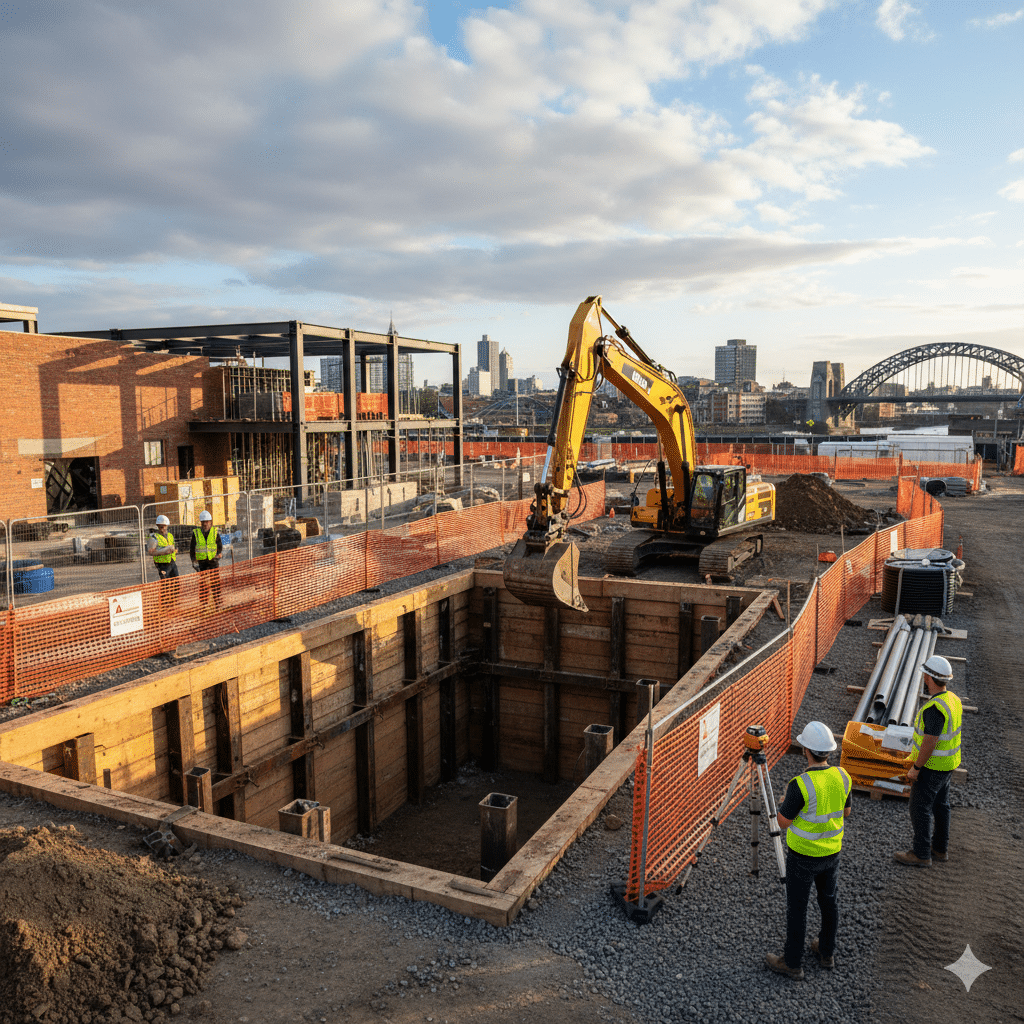
• Consider shoring or retaining where necessary
Understanding local ground behaviour reduces long-term structural risks.
Mistake 5 — Not Complying With NSW Safety Regulations
Excavation work falls under strict NSW laws due to the high-risk nature of the activity. Many incidents occur because duty holders do not follow the required controls.
Frequent compliance mistakes include:
• Inadequate trench support
• No Safe Work Method Statements (SWMS)
• Poor traffic/pedestrian controls
• Untrained personnel operating machinery
• Insufficient supervision
Prevention strategies:
• Follow SafeWork NSW guidelines
• Ensure all workers are trained and competent
• Use physical safety measures (barricades, trench shields, signage)
• Conduct daily risk assessments
Adhering to NSW excavation safety standards protects both workers and the project.
Mistake 6 — Poor Communication Between Stakeholders
Whether the client is a homeowner, builder, industrial operator or commercial developer, communication breakdowns can quickly lead to mistakes.
Typical communication issues:
• Misunderstood dig depths or site boundaries
• Incorrect assumptions about soil condition
• Lack of updates on project progress
• Poor coordination with concreters, plumbers, electricians or surveyors
How to avoid this:
• Establish a single point of contact
• Maintain daily updates during critical excavation stages
• Confirm all instructions in writing
• Share updated plans with all subcontractors
Clear communication is one of the best defences against errors.
Mistake 7 — Hiring Inexperienced or Unlicensed Contractors
Choosing the cheapest option often leads to the most expensive problems. Inexperienced contractors may not understand local site challenges, regulations or proper excavation techniques.
Risks include:
• Incorrect excavation depth
• Damage to underground services
• Structural instability
• Regulatory breaches
• Avoidable project delays
For peace of mind, work with providers offering professional excavation services in Newcastle backed by strong experience and local expertise.
How to Ensure a Smooth Excavation Project
To achieve a safe, compliant and efficient project, follow these best practices:
- Plan early
Book surveys, geotechnical tests and utility checks before work begins. - Understand your legal obligations
Explore NSW standards and learn more about excavation requirements in NSW. - Choose experienced local specialists
Local operators understand site conditions unique to Newcastle, the Hunter Valley and the Central Coast. - Maintain site safety at all times
Use correct trench support, machinery procedures and supervision. - Document everything
Plans, permits, variations, SWMS and daily safety logs provide transparency and control. - Use the right equipment
Proper machine and attachment selection is crucial. - Choose a full-service provider
This ensures comprehensive excavation solutions for commercial and residential projects without gaps or coordination issues.
Final Thoughts
Excavation mistakes can be costly, dangerous and disruptive—but with the right planning, professional support and adherence to NSW regulations, they are entirely avoidable. Whether you’re managing a large industrial project in the Hunter Valley, preparing a commercial development in Newcastle or completing residential site works on the Central Coast, understanding these risks ensures a smoother construction journey from start to finish.