Demolition doesn’t begin with machines on site. In New South Wales, it starts well before day one, with demolition approvals, safety planning, hazard checks, and controls that protect workers, neighbours, and the public. When those steps aren’t properly sorted, projects can be delayed, shut down, or put people at risk.
For homeowners in Newcastle, the Hunter Valley, Sydney, and the Central Coast, understanding what must be organised before demolition starts helps avoid stop-work issues and unexpected complications. This guide explains the key pre-start safety requirements in plain English, focusing on what must be in place before any structure comes down.
Why pre-start safety matters in NSW demolition
Demolition is classified as high-risk construction work in NSW. Older homes, tight residential blocks, shared accessways, and proximity to neighbours all increase the potential for serious hazards if the site isn’t properly prepared.
Pre-start safety requirements exist to:
• Identify and control hazards before work begins
• Ensure utilities are safely isolated
• Prevent exposure to hazardous materials
• Protect neighbours, pedestrians, and adjoining properties
• Reduce the risk of enforcement action or work stoppages
Many homeowners first become aware of these requirements when researching demolition services in Newcastle, and realise that site safety preparation starts well before any physical work begins.
Who is responsible for site safety before demolition?
One common source of confusion is responsibility. In NSW, site safety is shared, but roles are clearly defined.
Homeowner or client responsibilities
As the property owner commissioning the work, you are considered the “client” under NSW work health and safety laws. Your role typically includes:
• Engaging appropriately licensed contractors
• Ensuring required approvals or certificates are in place
• Allowing access for inspections and surveys
• Not pressuring contractors to bypass safety steps
While you’re not expected to manage day-to-day site safety, you should be satisfied that the fundamentals have been addressed before work starts.
Contractor responsibilities
The demolition contractor carries primary responsibility for:
• Identifying site-specific hazards
• Preparing risk assessments and Safe Work Method Statements (SWMS)
• Establishing exclusion zones and physical controls
• Coordinating specialist works (such as asbestos removal)
• Complying with SafeWork NSW demolition requirements
This is why working with a licensed demolition team matters when demolition involves higher-risk activities or older structures.
Paperwork that should be confirmed before work starts
Before demolition begins, certain documents should exist and be available. You don’t need to review every technical detail, but you should be aware that these items have been completed.
Risk assessments and SWMS
A demolition SWMS outlines how high-risk activities will be carried out safely. It should address:
• Structural instability risks
• Manual handling and machinery hazards
• Falls from height
• Exposure to hazardous materials
• Interaction with the public
If demolition involves partial removal or complex structures, the SWMS becomes especially important.
Hazardous materials reports
Many NSW homes built before the late 1980s contain asbestos. Prior to demolition:
• A hazardous materials survey should identify asbestos and other risks
• The report should specify locations and types of materials
• Removal requirements should be clearly defined
If asbestos is present, licensed removal must occur before or as part of the demolition process, following strict controls.
Service disconnection confirmations
Live services are a major cause of serious incidents. Before demolition:
• Electricity must be disconnected at the point of supply
• Gas services must be safely isolated and capped
• Water and sewer services must be addressed
• NBN and telecommunications should be identified
Written confirmation of disconnections helps prevent dangerous assumptions.
Physical site controls you should see before day one
Paperwork alone isn’t enough. A properly prepared demolition site will have visible controls in place before work starts.
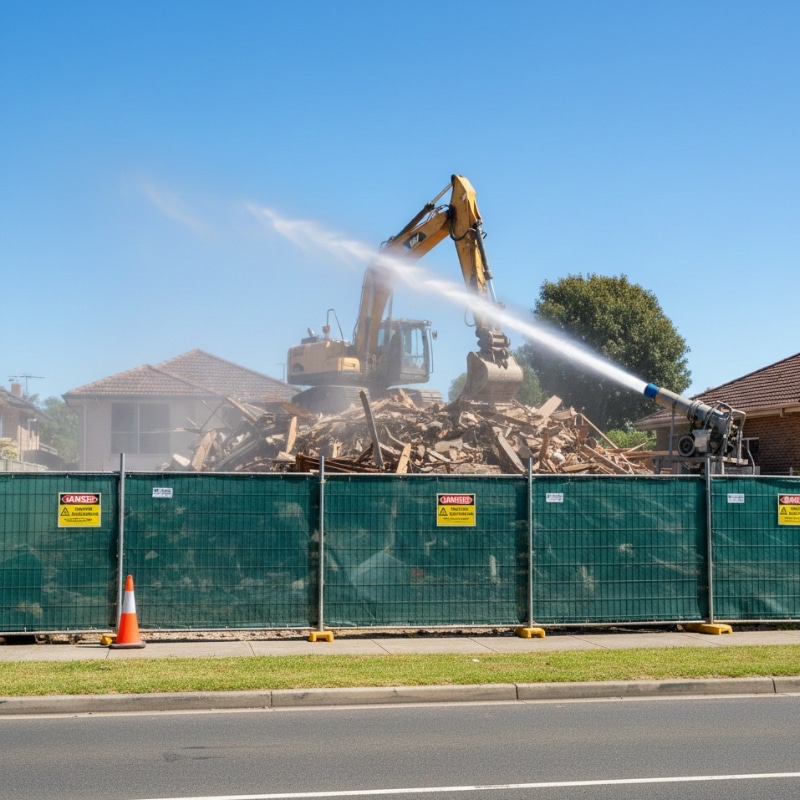
Secure fencing and access control
Residential demolition sites must be secured to prevent unauthorised access. This typically includes:
• Temporary fencing around the work zone
• Locked gates where required
• Clear boundaries between work areas and public spaces
In suburbs with foot traffic or neighbouring homes close by, fencing is critical.
Signage and exclusion zones
Warning signage alerts people to demolition activity and restricted areas. Exclusion zones:
• Keep workers clear of falling debris
• Protect neighbours and passers-by
• Reduce the risk of vehicle or plant interaction
Exclusion zones should be appropriate for the type of structure being demolished.
Dust, noise, and vibration controls
Demolition generates dust and noise that can affect nearby properties. Pre-start planning should include:
• Dust suppression measures (such as water sprays)
• Noise management strategies
• Consideration of vibration impacts on adjoining buildings
In coastal and windy areas around Newcastle and the Central Coast, dust control planning is particularly important.
Utility and environmental safety considerations
Beyond immediate site hazards, demolition must address broader safety and environmental risks.
Stormwater and sediment management
Disturbed ground can lead to runoff carrying sediment into drains and waterways. Controls may include:
• Temporary sediment fencing
• Drain protection
• Site grading considerations
These measures help comply with local environmental expectations and prevent downstream issues.
Waste handling and tracking
Demolition waste must be managed lawfully. This involves:
• Separating recyclable materials where practical
• Tracking regulated waste
• Using approved disposal facilities
Homeowners often rely on providers of trusted demolition services to navigate local disposal rules and compliance obligations.
Common pre-start safety issues that cause delays
Many demolition delays occur before work even begins. Common causes include:
• Unexpected asbestos findings
• Incomplete service disconnections
• Missing or inadequate SWMS
• Insufficient site fencing or controls
• Disputes over shared access or boundaries
Addressing these risks early helps avoid costly downtime once contractors are scheduled.
Newcastle and regional NSW realities to factor in
Older housing stock
Many Newcastle and Hunter Valley homes are decades old, increasing the likelihood of:
• Asbestos-containing materials
• Lead-based paints
• Non-standard construction methods
Early surveys are particularly important in these areas.
Tight blocks and shared access
Urban and inner-suburban properties often have:
• Narrow access points
• Shared driveways
• Close neighbouring structures
These factors affect exclusion zones, machinery selection, and traffic management planning.
Neighbour proximity
In built-up suburbs, safety planning should consider:
• Notification of adjoining owners
• Protection of neighbouring fences and structures
• Managing noise and dust impacts
Clear planning reduces disputes and safety complaints.
When specialist or licensed work is required
Some demolition-related tasks require additional licensing or expertise. These typically include:
• Asbestos removal
• Partial demolition affecting load-bearing elements
• Work near live infrastructure
• Complex structural dismantling
If these conditions apply, appropriately licensed professionals must be engaged before work begins.
Practical questions homeowners often ask
Do I need to see all the safety documents?
You don’t need to review every technical detail, but you should be comfortable with:
• Hazard assessments have been completed
• Services are disconnected
• Site controls are in place
Asking clear questions early is reasonable.
Can demolition start while issues are sorted out?
In NSW, demolition should not commence until the required safety steps are completed. Starting early can result in stop-work orders or penalties.
Who checks demolition safety compliance?
Compliance may be reviewed by:
• Council or certifiers
• SafeWork NSW inspectors
• Utility providers
Inspections can occur before or during demolition.
How safety readiness supports a smoother demolition process
When safety is properly planned before demolition:
• Work progresses with fewer interruptions
• Neighbour issues are minimised
• Risks to people and property are reduced
• Compliance checks are easier to manage
For authoritative guidance on demolition safety obligations in NSW, SafeWork NSW provides detailed information on demolition hazards, planning, and compliance requirements.
Frequently asked questions
What is a demolition exclusion zone?
An exclusion zone is a defined area around demolition work where unauthorised people are not permitted. It helps protect against falling debris, machinery movement, and structural collapse.
Is an asbestos report always required before demolition?
If there is a reasonable likelihood of asbestos being present — which is common in older NSW homes — a survey is required before work starts.
Can neighbours stop a demolition due to safety concerns?
Neighbours can raise concerns with the council or SafeWork NSW if they believe safety controls are inadequate. Proper pre-start planning reduces the risk of disputes.
What happens if services aren’t fully disconnected?
Live services present a serious risk. If discovered, work should stop until disconnections are confirmed, which can cause delays.
Does site safety planning differ for partial demolition?
Yes. Partial demolition often involves additional structural risk assessments and more detailed planning.
Final thoughts
Demolition site safety in NSW isn’t just about compliance — it’s about ensuring that when work starts, it can proceed without unnecessary risk or disruption. By understanding what must be sorted before day one, homeowners are better positioned to ask the right questions and recognise when a site is genuinely ready.