Preparing a property for demolition in NSW involves more than simply organising machinery and knocking a structure down. Whether you’re planning to remove a residential home, a commercial building or an industrial facility, proper preparation ensures compliance, safety, efficiency and a smooth project timeline. This comprehensive checklist explains every essential step to help you confidently prepare your property before demolition begins.
Why Proper Demolition Preparation Matters in NSW
Preparing a site correctly helps ensure:
- Compliance with NSW council and SafeWork regulations
• Lower risk of delays or financial blowouts
• Safer working conditions for everyone on-site
• Efficient access for machinery and vehicles
• Proper handling of utilities, asbestos and hazardous materials
• Responsible waste management and recycling
Skipping essential steps can cause major setbacks, so a structured approach is crucial.
Step 1 – Confirm Your Demolition Approvals and Documentation
Before any demolition begins, NSW regulations require specific approvals and reports. These documents ensure the work is legally permitted and safely executed.
Development Approval (DA) or Complying Development Certificate (CDC)
Most demolitions require:
- Development Approval (DA) through your local council, or
• Complying Development Certificate (CDC) from a private certifier
Residential knockdown-rebuilds commonly use CDCs due to fast approval times. Commercial and industrial demolitions often require DAs because of zoning, environmental impact or structural complexity.
Asbestos and Hazardous Material Surveys
Buildings constructed before 2004 may contain asbestos. Before demolition, NSW law requires:
- A licensed asbestos inspection
• A hazardous materials report (lead paint, mould, chemicals)
• Removal by a licensed asbestos professional if needed
For compliance, you can refer to the official NSW demolition and asbestos regulations.
Engineering, Structural and Environmental Reports
Depending on your project, you may also require:
- Structural engineering assessments
• Soil contamination testing
• Environmental management plans
• Noise or vibration impact reports
Finalising these early helps avoid approval delays.
Step 2 – Disconnect All Utilities Safely
Utility disconnection is one of the most important and time-sensitive parts of pre-demolition preparation. Many services can only be disconnected by the provider, so bookings should be made early.
Electricity
Power must be isolated at the street level, not just at the meter. Only authorised providers such as Ausgrid or Endeavour Energy can carry out the final disconnection.
Gas
A licensed gas fitter must disconnect and cap the gas supply safely.
Water and Sewer
Depending on your location, Sydney Water or Hunter Water may need to disconnect services formally.
Telecommunications and NBN
NBN and phone lines should be removed or capped before heavy equipment enters the site.
If you need support coordinating this step, Watson Demolition & Site Services provides professional demolition services in NSW to help manage the process efficiently.
Step 3 – Prepare the Site for Safe Access
Access is essential for demolition machinery, trucks and waste removal bins. Preparing your site early prevents delays once work begins.
Remove or Relocate Outdoor Items and Structures
These may include:
- Sheds or cubby houses
• Outdoor furniture
• Fences or gates
• Pergolas or decks
• Garden features
• Pools (subject to additional approvals)
Anything left on-site should be clearly identified in the demolition scope.
Clear Driveways and Access Points
Ensure all entry areas are free from:
- Vehicles
• Skip bins
• Building materials
• Plant overgrowth or tree branches
Ensure Machinery Access Is Available
Demolition equipment such as excavators, tippers and skid steers require manoeuvring space. If you’re unsure whether your site allows suitable access, you can learn more about demolition requirements and schedule a site assessment.
Step 4 – Manage Salvage, Recycling and Waste Disposal
NSW has strict requirements for recycling and waste disposal. Planning ahead ensures environmental compliance and may reduce landfill costs.
Identify Salvageable Materials
Many demolition materials can be reused or sold, including:
- Timber flooring
• Doors and windows
• Roof sheeting
• Appliances
• Bricks and pavers
• Light fixtures
This helps reduce waste and may save you money.
Prepare a Waste Management Plan
Your demolition contractor will typically coordinate:
- Metal recycling
• Concrete and brick crushing
• Timber recycling
• General waste separation
• Safe asbestos disposal (if required)
A structured waste plan benefits both the environment and your budget.
Step 5 – Notify Neighbours and Prepare for Noise & Safety Requirements
Most NSW councils recommend informing neighbours before demolition begins, especially in residential and built-up commercial areas.
Notify Neighbours of Key Information
This may include:
- Planned demolition dates
• Noise and dust expectations
• Your demolition contractor’s contact details
Good communication helps prevent complaints or disputes.
Dust, Noise and Vibration Controls
Your contractor will implement control measures such as:
- Water spraying for dust suppression
• Protective sheeting or screens
• Vibration monitoring for sensitive sites
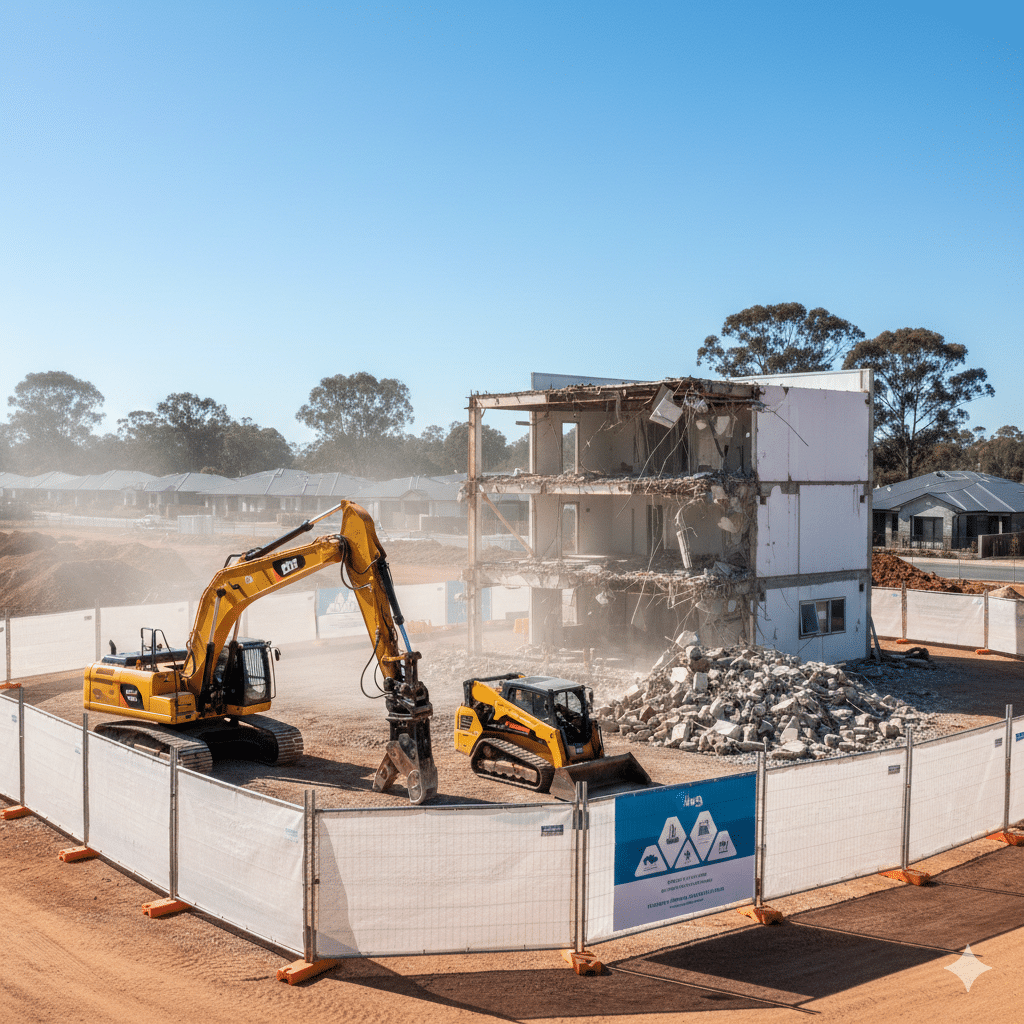
• Temporary fencing and safety barriers
These measures ensure a safer demolition environment and help maintain compliance.
Step 6 – Organise Site Security and Safety Controls
Proper site security is crucial before demolition begins.
Install Temporary Fencing and Safety Signage
NSW regulations require:
- Secure perimeter fencing
• No-entry and hazard signage
• Restricted access for unauthorised persons
Larger commercial or industrial projects may require:
- Traffic management plans
• Detailed site-specific safety plans
Protect Neighbouring Structures
Demolition can affect nearby buildings, especially in high-density areas. Protective methods may include:
- Hoarding
• Temporary structural bracing
• Vibration control measures
Your contractor will recommend the appropriate solutions.
Step 7 – Complete the Final Clear-Out Before Demolition Begins
Once approvals, utility disconnections and site access preparations are complete, you can begin the final clear-out.
Remove All Personal Items (Residential)
This includes:
- Furniture
• Clothing and valuables
• Whitegoods
• Gardening tools
• Outdoor play equipment
Clear the Space (Commercial and Industrial)
Ensure removal of:
- Documents and records
• IT systems and servers
• Machinery or equipment
• Inventory
• Fixtures you intend to reuse
Confirm Start Date and Final Details
A quick pre-demolition meeting ensures:
- All disconnections are completed
• Approvals are ready
• Weather forecasts are suitable
• Machinery and waste bins are scheduled
For complete support leading up to demolition day, Watson Site Services offers comprehensive demolition solutions available across Newcastle, Sydney, the Hunter Valley and the Central Coast.
Conclusion
Preparing your property for demolition in NSW is a structured process involving approvals, safety planning, utility disconnections, waste management and site access organisation. Whether you’re removing a home in Newcastle, a commercial building in Sydney or an industrial structure in the Hunter Valley, following this checklist ensures a smooth, compliant and efficient demolition project.
With the right documentation and an experienced contractor, your demolition can proceed confidently and without unnecessary delays.