If you’ve ever wondered why two seemingly similar blocks in Newcastle can have completely different building costs, the answer often lies beneath the surface.
Ground conditions play a major role in determining how much site preparation is required before construction begins. From reactive clay soils to rock shelves and sloping blocks, what’s under your feet can significantly affect foundation design, machinery requirements and overall project timelines.
For property owners across Newcastle and the Central Coast, understanding how soil and site conditions influence costs can help avoid budget blowouts and unexpected delays.
Why Ground Conditions Matter Before Construction Starts
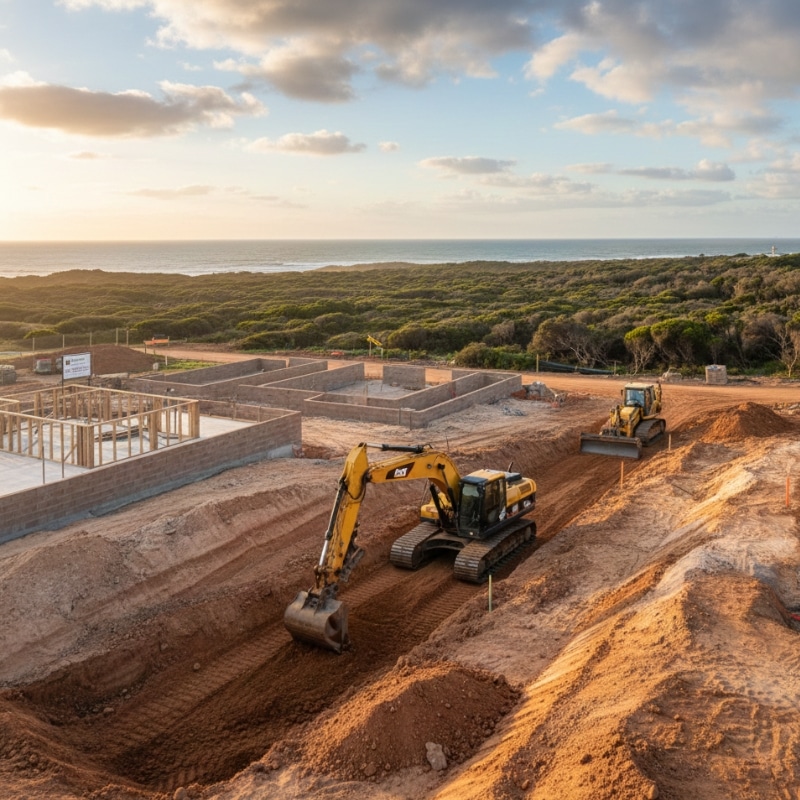
Before a slab is poured or footings are installed, the land must be assessed, prepared and stabilised. This process often involves excavation, earthmoving, levelling, and sometimes the removal of unsuitable material.
The complexity of this work depends entirely on:
- Soil type
- Site classification
- Slope and elevation
- Presence of rock
- Drainage and groundwater levels
- Access constraints
Each of these factors directly influences machinery requirements, labour time and engineering design — all of which affect cost.
Quick answer
Ground conditions impact building costs because they determine how much preparation is needed to create a stable foundation. Poor soil, steep slopes, rock or high water tables require additional excavation, reinforcement or drainage solutions, increasing overall construction expenses.
Common Soil Types in Newcastle and the Central Coast
The Newcastle region is known for varied ground conditions. Coastal zones, inland suburbs and elevated areas can all present different soil profiles.
Reactive Clay (Class M, H1, H2 and E Soils)
Reactive clay soils expand when wet and shrink when dry. In NSW, site classifications such as Class M (moderately reactive) and Class H (highly reactive) are common.
The higher the reactivity:
- The deeper and stronger the footings must be
- More reinforcement is required
- The greater the excavation precision needed
Highly reactive clay can significantly increase slab design costs and preparation time.
Sandy Coastal Soils
Near the coast, sandy soils are more common. While sand drains well, it often has a lower bearing capacity.
This may require:
- Compaction
- Soil replacement
- Engineered fill
- Wider or deeper footings
Although sand can be easier to dig, stabilisation can add to costs.
Rock Shelves and Shale
Parts of Newcastle contain sandstone and shale layers. Hitting rock during excavation can:
- Slow down the machinery
- Require specialised attachments
- Increase fuel and labour time
- Extend project timelines
Rock removal is one of the most significant cost variables in site preparation.
How Sloping Blocks Increase Building Costs
Newcastle’s topography includes many elevated and sloping blocks, particularly in established suburbs and semi-coastal areas.
Sloping sites often require:
- Cut and fill operations
- Retaining walls
- Bench levels
- Additional drainage systems
The steeper the block, the more detailed and extensive the excavation process becomes.
Why does cut and fill affect budgets?
Cut and fill involves removing soil from higher sections of the block and redistributing it to lower areas to create a level building platform.
Cost increases occur when:
- There is excess material that must be removed off-site
- Additional fill must be imported
- Soil is unsuitable for reuse
- Compaction testing is required
Every extra movement of material adds time, plant usage and compliance considerations.
The Role of a Geotechnical Report
A geotechnical report identifies soil classification and ground behaviour. It guides engineers in designing appropriate foundations.
Without proper soil testing, builders risk:
- Foundation movement
- Structural cracking
- Drainage failures
- Costly remedial works
Site classification and compliance with building standards are critical to ensuring structural stability and safety. Engaging properly qualified professionals early reduces risk and cost surprises later.
How Groundwater and Drainage Impact Costs
High groundwater levels or poor drainage can complicate site works considerably.
When water is present:
- Excavation may require dewatering
- Trenches can collapse
- Soil may lose bearing strength
- Additional drainage infrastructure becomes necessary
Coastal areas and low-lying parts of Newcastle are particularly susceptible to drainage challenges.
What happens if drainage is ignored?
Poor drainage can lead to:
- Slab heave
- Settlement issues
- Erosion around footings
- Ongoing moisture problems
Correct site preparation reduces long-term maintenance costs.
Access Constraints and Their Hidden Impact
Ground conditions aren’t the only factor. Access to the site can influence how excavation is performed.
Narrow driveways, limited street access or tight residential areas may require:
- Smaller machinery
- Staged material removal
- Additional labour time
Restricted access often increases the duration of site preparation.
When Rock Changes Everything
Rock is one of the biggest unknowns in site preparation.
How does rock affect excavation costs?
Rock requires:
- Specialised attachments
- Increased machine wear
- Longer operational hours
- Possible hammering or splitting
Even a thin rock shelf can change the scope of work significantly.
For homeowners dealing with challenging ground conditions, working with experienced operators providing professional excavation solutions in Newcastle can help ensure the right equipment and approach are used from the start.
How Soil Classification Impacts Foundation Design
In NSW, soil classes (M, H1, H2, E, P) determine how foundations must be engineered.
Higher classifications mean:
- Stronger reinforcement
- Deeper beams
- Additional structural design input
- More precise excavation
What is Class H soil?
Class H soil indicates high reactivity. This means it can experience significant movement with moisture changes.
Building on Class H soil typically requires:
- Deeper edge beams
- Greater slab reinforcement
- Careful moisture control planning
These adjustments increase both material and preparation costs.
The Cost Chain Reaction of Poor Ground Conditions
Ground conditions don’t just impact excavation — they influence the entire construction sequence.
For example:
- Difficult soil → Increased excavation time
- Increased excavation → Higher machinery costs
- Higher site prep costs → Larger engineering requirements
- Engineering upgrades → Higher slab costs
What starts as a soil issue quickly affects the overall build budget.
This is why early engagement with excavation and site preparation specialists is often critical for accurate budgeting.
Coastal vs Inland Blocks: What’s the Difference?
Coastal properties near the Central Coast may face:
- Sandy profiles
- Higher water tables
- Salt exposure
- Erosion concerns
Inland or elevated areas may encounter:
- Reactive clay
- Rock layers
- Steeper gradients
Each scenario requires a different excavation strategy.
Practical Scenarios in Newcastle
Scenario 1: Flat Block with Reactive Clay
Even a flat block can be expensive if soil reactivity is high. Additional reinforcement and precise excavation depth are required to minimise movement.
Scenario 2: Sloping Block with Rock Shelf
This combination can increase costs substantially due to:
- Cut and fill
- Rock breaking
- Retaining structures
Scenario 3: Coastal Block with Drainage Issues
Dewatering and engineered fill may be required before slab construction begins.
In each case, understanding site conditions early allows property owners to learn more about site excavation requirements before construction begins.
Frequently Asked Questions
How do soil types affect building costs in Newcastle?
Soil type determines how foundations must be designed and how much preparation is required. Reactive clay, sand and rock all demand different excavation approaches, directly influencing cost.
Are sloping blocks always more expensive to build on?
Not always, but steeper slopes typically require more earthmoving, retaining and drainage work, increasing site preparation expenses.
Does rock always increase costs?
Yes, in most cases. Rock slows excavation, increases machinery wear and may require specialised equipment.
Is a geotechnical report necessary?
It is strongly recommended. A soil report helps engineers design appropriate footings and prevents unexpected ground-related issues.
Can poor drainage increase foundation costs?
Absolutely. Water-affected soil loses strength and may require additional stabilisation measures.
When Should You Speak to a Professional?
If your block has:
- Noticeable slope
- Known reactive clay
- Visible rock
- Drainage problems
- Nearby properties with foundation cracking
It’s wise to seek expert advice early. Experienced teams that understand local soil behaviours and preparation requirements.
Why Early Site Assessment Saves Money
Many budget overruns occur because ground conditions were underestimated.
Early investigation allows:
- Accurate machinery planning
- Proper equipment allocation
- Realistic timeframes
- Engineering alignment
Working with professionals who understand Newcastle’s soil profiles can significantly reduce surprises once excavation begins.
Final Thoughts
Building costs in Newcastle aren’t determined solely by design choices or material selection. The true cost often starts underground.
Reactive clay, sandy soils, rock shelves, slopes and drainage conditions all influence how much work is required before construction begins. The more complex the ground conditions, the more detailed and extensive the excavation process must be.
By understanding these factors early and consulting experienced excavation and site preparation specialists, property owners can approach construction with realistic expectations and greater confidence.