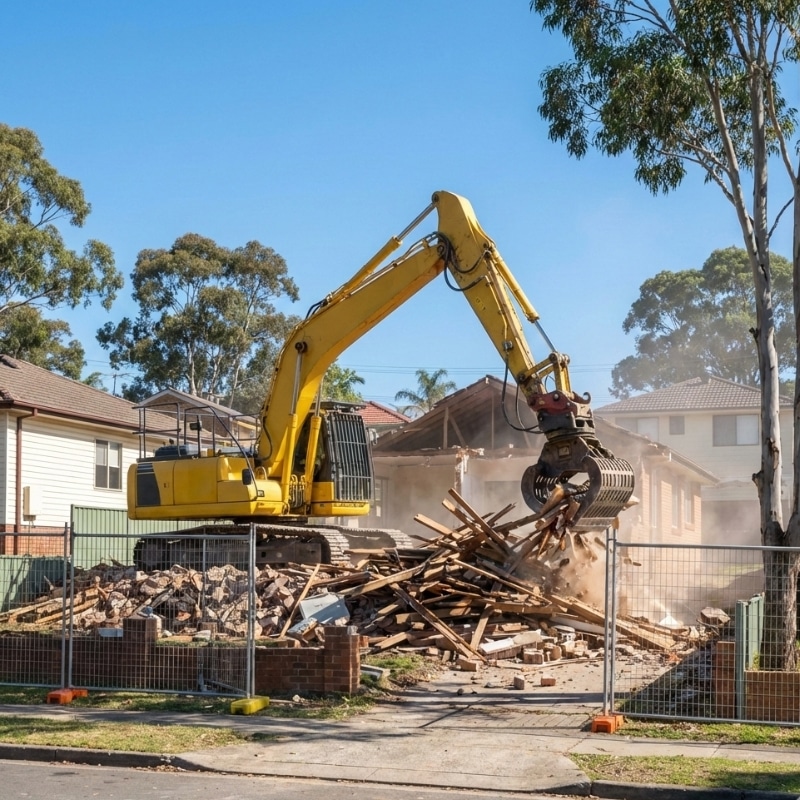
Demolishing a house is often the first major step in a knockdown rebuild or redevelopment project. For many NSW homeowners, however, the biggest unknown is cost. House demolition pricing can vary significantly depending on where you live, the condition of the property, and what’s hidden beneath the surface.
This practical guide explains house demolition cost in NSW, what factors influence pricing, and how demolition decisions can affect your broader project timeline and budget — particularly for homeowners in Newcastle, Sydney, the Hunter Valley, and the Central Coast.
Whether you’re planning to rebuild, subdivide, or clear a site for future development, understanding demolition costs upfront helps you avoid surprises later.
What Influences House Demolition Cost in NSW?
House demolition costs in NSW sit within a broad range due to the number of variables involved.
While general cost expectations can help with early planning, no two demolition projects are identical. A small weatherboard home in Newcastle may involve very different considerations compared to a double-brick dwelling in metropolitan Sydney.
The key takeaway is this: demolition pricing is site-specific, and averages alone rarely tell the full story.
The Biggest Factors That Affect House Demolition Cost
Understanding what drives demolition pricing allows homeowners to plan more accurately and ask better questions when comparing quotes.
Property Size and Construction Type
The overall size of the dwelling directly affects labour, machinery time, and waste volumes.
Costs increase when homes are:
• Double or triple brick
• Concrete slab construction
• Two-storey or split-level
• Built with heavy materials such as reinforced concrete
Larger homes generally require more time and planning to dismantle safely.
Asbestos Identification and Removal
Asbestos is one of the most significant cost drivers in NSW house demolition.
Many homes built before the late 1980s contain asbestos in:
• Eaves and soffits
• Wall sheeting
• Roofing materials
• Internal linings
If asbestos is present, licensed removal is mandatory under NSW regulations. This involves additional safety controls, air monitoring, disposal requirements, and compliance documentation. Importantly, asbestos is often not confirmed until a pre-demolition inspection is completed, making early assessments critical.
Site Access and Location Constraints
Access challenges can increase demolition costs even for smaller homes.
Common access issues include:
• Narrow driveways
• Steep or sloping blocks
• Limited street access
• Close proximity to neighbouring buildings
Inner-city Sydney sites often involve more planning due to density, while some regional properties may allow easier machinery movement.
Waste Removal and Recycling Requirements
Demolition isn’t just about removing a structure — it also involves responsible waste management.
NSW requirements include:
• Separation of recyclable materials
• Safe disposal of hazardous waste
• Transport to approved facilities
Concrete, brick, timber, steel, and asbestos all require different handling methods, which influence overall project complexity.
Council Approvals and Compliance
Demolition in NSW usually requires either:
• A Development Approval (DA), or
• A Complying Development Certificate (CDC)
Approval requirements depend on the property type, zoning, and local council rules. Understanding demolition permit requirements in Newcastle and the surrounding regions is particularly important, as incorrect approvals can cause project delays.
How Location Influences Demolition Projects Across NSW
Where your property is located plays a key role in how demolition is planned and executed.
Newcastle and the Hunter Valley
In Newcastle and the surrounding Hunter Valley areas:
• Access is often less restrictive than dense metro suburbs
• Older housing stock increases the likelihood of asbestos
• Regional compliance requirements still apply
Early planning remains essential, particularly for older homes.
Sydney Metropolitan Areas
Sydney demolition projects typically involve:
• Traffic and site management considerations
• Noise and work-hour restrictions
• Limited access and neighbour proximity
Even modest-sized dwellings may require more detailed demolition planning in metropolitan environments.
Central Coast Properties
Central Coast demolitions can vary depending on:
• Coastal conditions
• Sloping land
• Age of existing dwellings
Thorough site assessments help reduce unexpected complications.
How Demolition Affects Your Rebuild or Development Plans
Demolition costs don’t exist in isolation — they directly influence your broader project.
Budget Planning
If demolition requirements are underestimated, it can affect:
• Design decisions
• Landscaping allowances
• Site preparation
• Construction contingencies
Understanding demolition scope early allows for smoother transitions into the build phase.
Project Timelines
Delays relating to approvals, asbestos handling, or site clearance can impact when construction can begin. Demolition often sits on the critical path of a knockdown rebuild.
Site Readiness for Builders
Professional demolition ensures:
• Clean and level sites
• Proper services disconnection
• Compliance documentation for builders
Working with trusted house demolition specialists in NSW helps reduce handover issues and supports smoother construction starts.
Can Homeowners Manage House Demolition Costs Effectively?
While safety and compliance must always come first, there are legitimate ways to approach demolition more efficiently.
Early Site Inspections
Arranging early inspections helps identify:
• Asbestos risks
• Access constraints
• Approval requirements
This reduces unexpected issues later.
Understanding the Process Before Quoting
Reviewing a complete house demolition guide for NSW homeowners allows homeowners to understand what’s included in a professional demolition scope before requesting quotes.
Choosing Experienced Contractors
Experienced demolition contractors can:
• Identify risks early
• Plan machinery access efficiently
• Manage waste correctly
• Maintain compliance throughout the project
Why Licensing and Compliance Matter in NSW
Demolition work in NSW is tightly regulated to protect workers, neighbours, and the environment.
Licensed contractors must comply with:
• Demolition safety standards
• Asbestos handling laws
• Environmental disposal requirements
Homeowners can refer to SafeWork NSW demolition and asbestos guidelines for authoritative compliance information. Using unlicensed operators may appear appealing initially, but it can expose homeowners to legal, safety, and insurance risks.
Frequently Asked Questions About House Demolition in NSW
How long does house demolition usually take?
Timeframes depend on site conditions, approvals, and asbestos requirements. Standard residential demolitions are typically completed within a short on-site window, followed by clearance and documentation.
Is asbestos removal always included?
Asbestos removal may be treated as a separate scope depending on testing outcomes. Always confirm this during the quoting process.
Do I need council approval to demolish a house in NSW?
Yes. Most demolitions require approval through either a DA or CDC, depending on council and planning controls
Is demolition a better option than renovating?
In many cases, demolition provides a cleaner starting point for modern construction, particularly where structural issues or asbestos are present.
Choosing the Right Demolition Partner in NSW
Selecting the right demolition contractor is about experience, compliance, and transparency — not just price.
Look for:
• Proper licensing and insurance
• Local NSW knowledge
• Clear scopes of work
• Strong safety and compliance processes
Professional demolition supports safer projects, smoother approvals, and better long-term outcomes for homeowners across NSW.